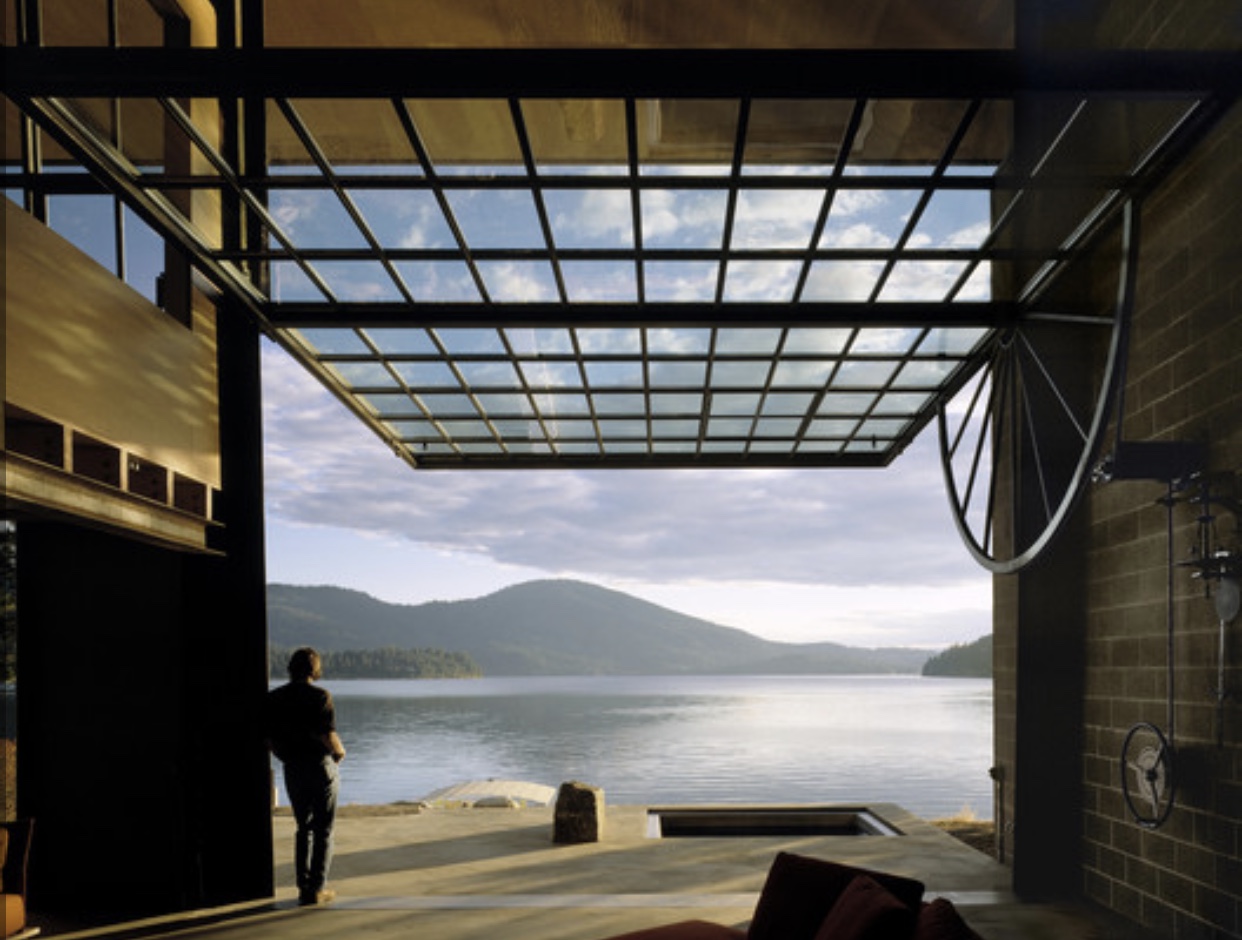
In my design I’ve been looking at different types of kinetic architecture, Olson Kundig’s Chicken Point Cabin is an example of a kinetic facade. The building consists of one large glass facade that when a wheel is turned, the facade rotates and opens out onto the lake. I am very interested in how mechanics can be incorporated into architecture and used in different ways to create unique spaces. For my design I am having three seperate moving platforms which will be able to move to create different levels for different uses.
“Radical art – and I’ve always thought of myself as radical – is always at the frontiers, always speculative, always too radical to be really understood initially. It changes your frame of reference. That’s what Duchamp did.” – Michael Craig-Martin
EDUCATION
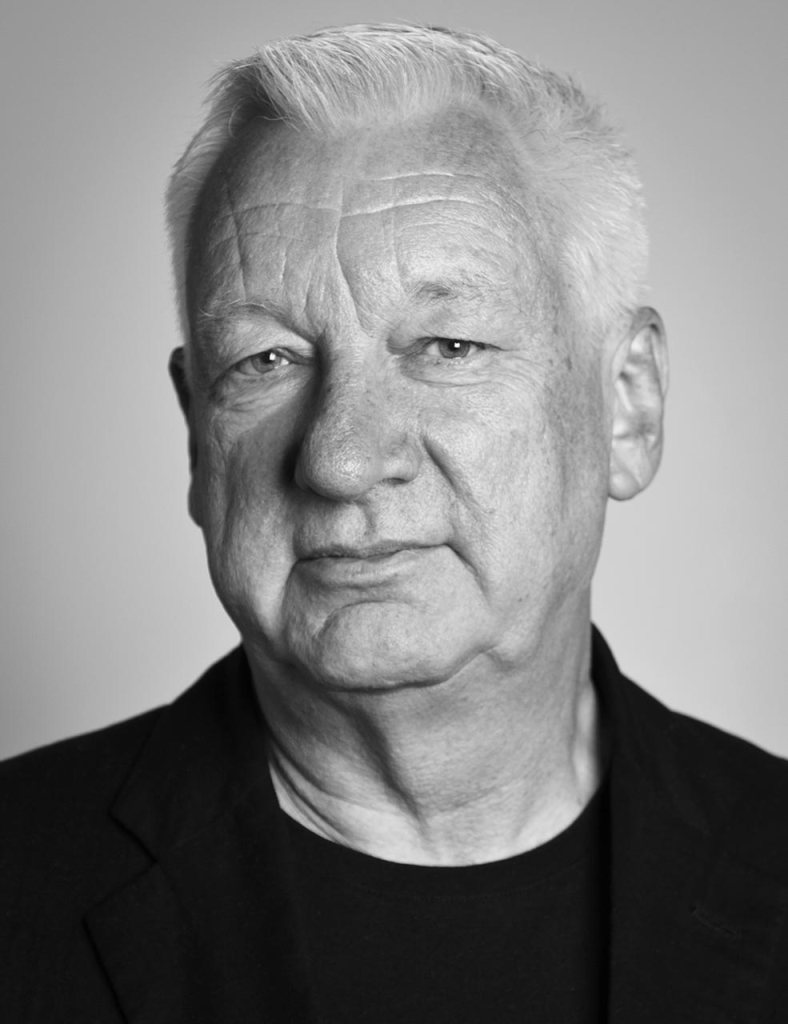
Michael Craig Martin
Although born in Dublin, Ireland Craig Martin grew up and was educated in the United States from the age of 5. In 1963 he attended School of Visual Arts in New York obtaining a BA in fine art. Craig-Martin then went on to complete a Masters in fine art (MFA) at the Yale University School of Art and Architecture. On completing his studies in 1966 Craig-Martin moved to London where he has continued to live for the past 50 years.
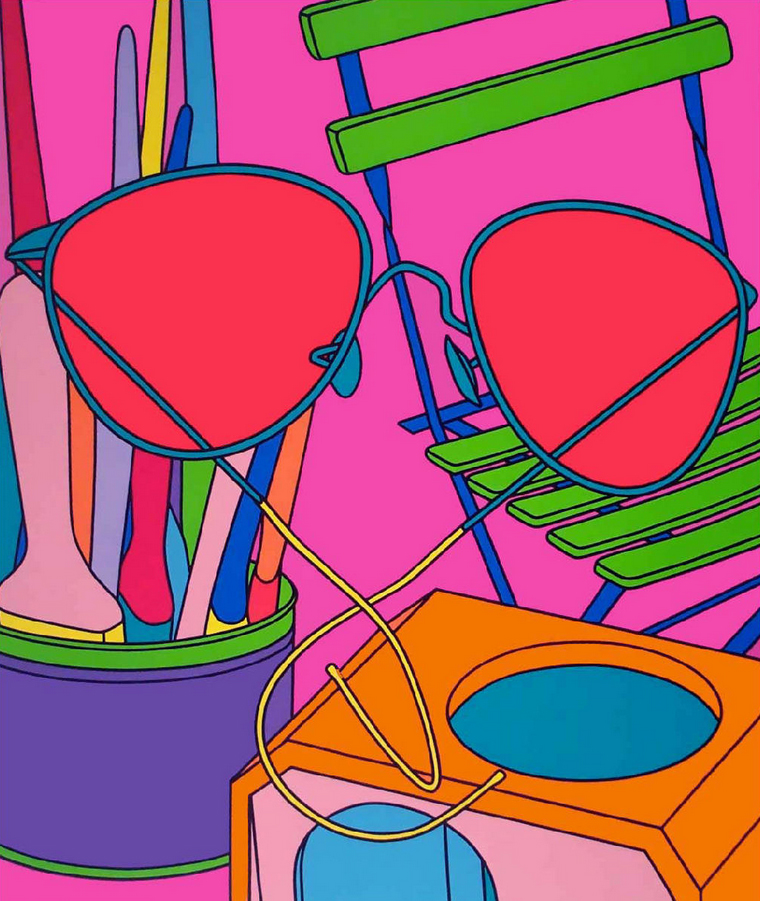
“I started making drawings of ordinary objects, one at a time, in 1977. I drew them on A4 paper with a pencil and then traced them in very fine tape onto acetate to remove all trace of their being handmade. I had no idea where they might take me, and it would have been inconceivable to me that they would remain at the center of my work to this day. I intended them to be “styleless”, but over the years the way they look has come to be recognizable as my style.” —Michael Craig-
Craig-Martin’s signature style
AWARDS AND ACHIEVEMENTS
In 1989 Craig-Martin was appointed artist trustee of the Tate Gallery, London. In 1997 Craig-Martin represented Britain in the 23 rd Sao Paulo Biennal. In 2001 Craig-Martin was appointed with a CBE. In 2006 Craig-Martin was elected as a member of the Royal Academy of Arts, London (RA) In 2016 Craig-Martin was awarded a knighthood for his services to art
HIS WORK AND INSPIRATION
Through his observational
drawings of everyday, mundane, objects Craig-Martin has created a record of
technological innovation and the transience of this. In his earlier works
Craig-Martin captures analogue processes which transcend into digital
technologies through his body of work. Within his work Craig-Martin explores
ideas of form and function and the relationship between objects, images,
symbols and pictures.
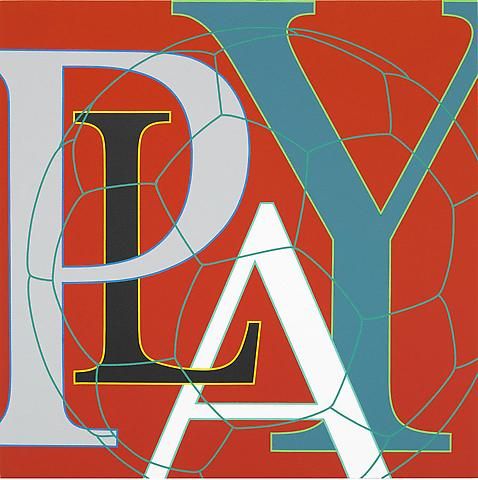
Craig-Martin uses perspective in his line drawings to suggest depth and a three dimensional effect to what is essentially flat, two dimensional, work. A few of the many mediums Craig-Martin uses include painting, sculpture, installations, computer works and drawings. Craig-Martin has also recently moved into more digital works such as a digital colour changing lightbulb which changes colour using software algorithms. Craig-Martin has been using computer technology to simplify his drawings to make them as artificial as possible. He designs his drawings digitally then creates them using paint rollers and thin tape.
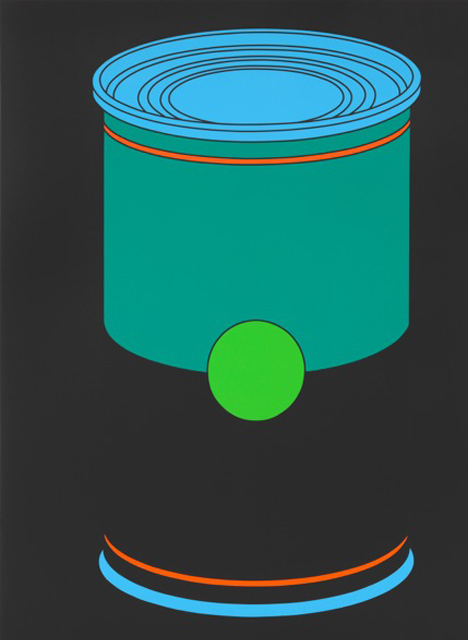
With his bold use of colour it is not surprising that Craig- Martin has taken inspiration from pop artists like Andy Warhol who he paid homage to in his piece ‘Untitled (Soupcan profile)’ in 2013. However it wasn’t until the 1990’s that Craig-Martin developed his hallmark style with his iconic tape drawings.
Untitled (soupcan profile)
An Oak Tree
‘An oak tree’, 1973 is one of Craig-Martin’s most iconic works. Although one of his earlier works, and not typical of his well- known style of work, this piece is considered one of Craig-Martin’s best works. This conceptual piece is simply a glass of water that Craig-Martin claims to have changed into an oak tree. Craig-Martin has explained the thought process behind this piece saying “I was trying to work out what was the essence of a work of art. I thought it had to do with suspension of disbelief. You get it in theatre – why not in art?”
EARLY WORK
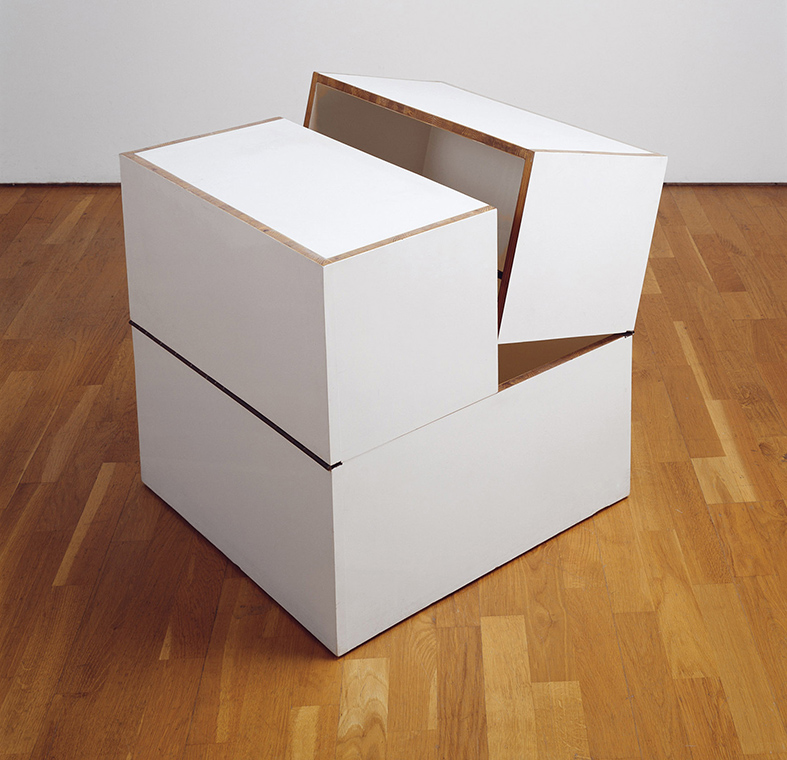
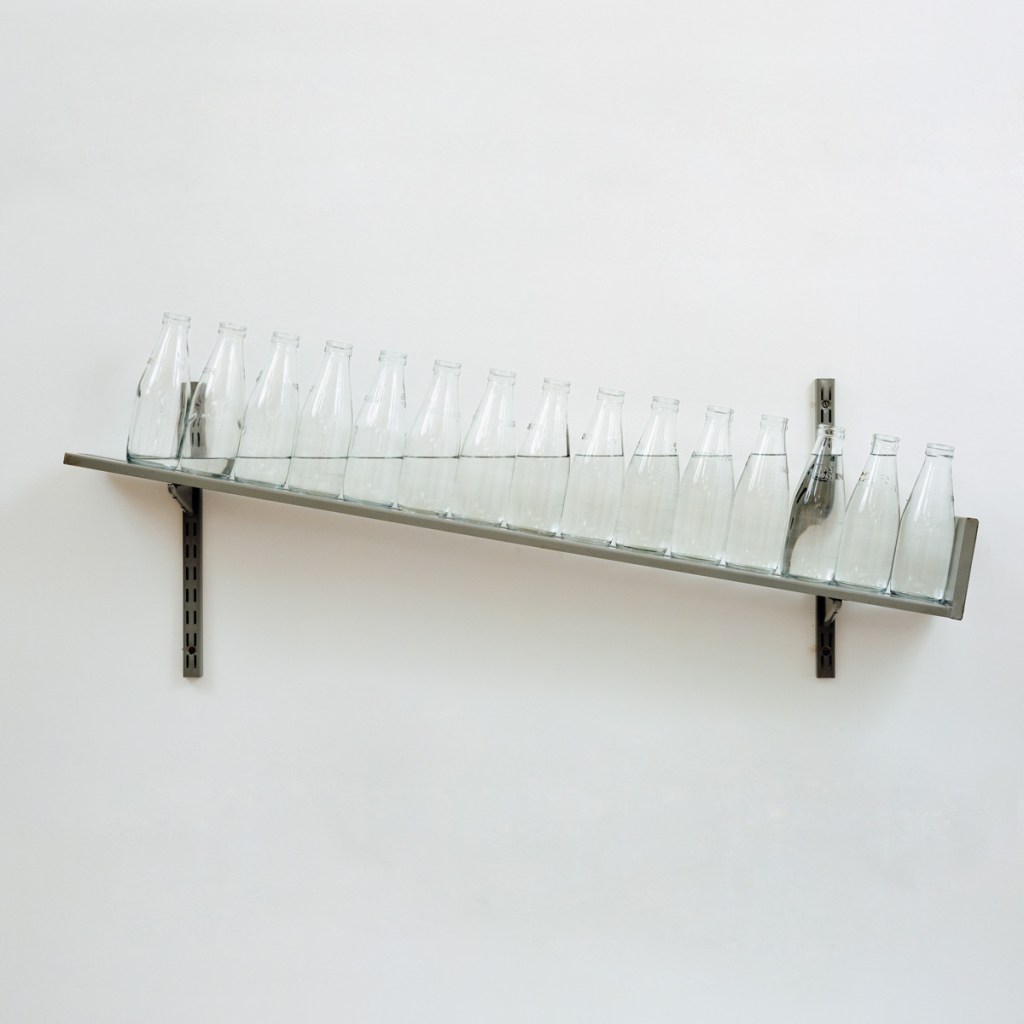
Craig-Martin’s early work explored and questioned the nature of art and representation through a number of mediums. These works are quite simplistic; taking inspiration from American minimalism. These pieces strongly contrast Craig-Martin’s later boldly coloured paintings. However, some of Craig-Martin’s earlier pieces are considered his best works. These include works such as the 1967 work ‘The box that never closes’. Another is ‘On the shelf’ which is an angled shelf featuring fifteen milk bottles which are filled with water which forms a straight level.
The box that never closes.
On the shelf.
My installations question the nature of picture making. Instead of looking at a painting, it feels like you are stepping inside it. All the images are sucked in onto the canvas and then exhaled on the wall opposite. —Michael Craig-Martin
RECENT WORK
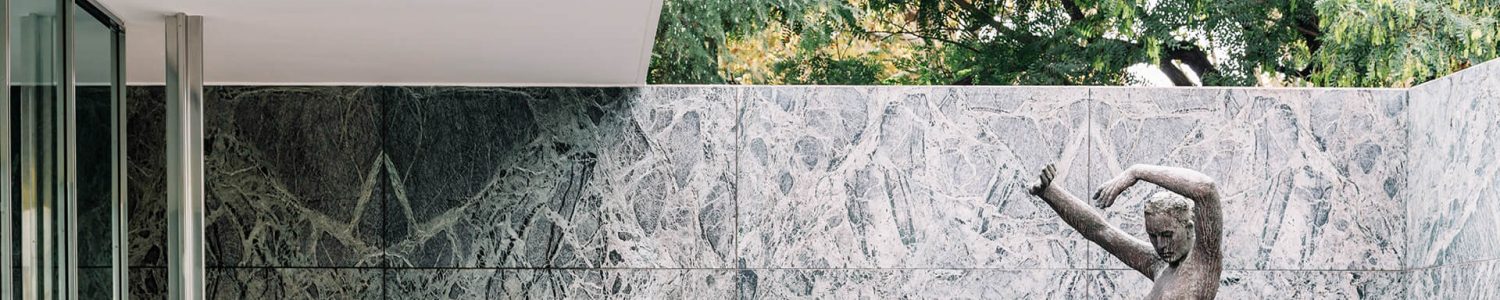
Craig-Martin’s recent solo exhibitions include the Museum Haus Esters in Germany in 2013 and his 2012 exhibition at the Rugby Art Gallery and Museum in Zurich. As of late Craig-Martin has started a new body of work which is inspired by iconic modernist architecture of the 20 the century; the likes of which include the work of Mies van der Rohe and Le Corbusier.
TEACHING CAREER
Craig-Martin is recognised within the teaching industry as a prolific and influential art teacher. Starting his teaching career upon moving to London in 1966 Craig-Martin lectured at Bath Academy of Art and Canterbury College of Art. However, he is best recognised for his work at Goldsmiths College, London. He worked at Goldsmith’s for two periods; 1974 to 1988 and 1994 to 2000. During his second stint at Goldsmiths Craig-Martin was appointed Milliard Professor of Fine Arts. Throughout his teaching career Craig Martin is known to have tutored high profile artists such as Damien Hirst, Gary Hume, Tracy Emin and Sarah Lucas. These artists are commonly referred to as the Young British Artists (YBAs) because of their significant and influential role in the art scene in the 90’s. When asked about his role in the YBAs careers’ Craig-Martin said that ‘They also knew they couldn’t do what lots of artists have done – go on the dole. There was no dole. They knew the only way to survive was through their work. They had a sense that there was somebody out there to speak to, and started to work with the idea of an audience before there was an audience.” Craig-Martin has also published multiple publications including his memoir ‘On being an Artist’ which acts as a inspiration for aspiring artists.
IMPORTANT AND RECENT EXHIBITIONS
Craig-Martin’s first
solo exhibition was at the Rowan Gallery in London in 1969.
In 1972
Craig-Martin posed work in a collective exhibition of British conceptual art,
entitled ‘the new art’, at the Hayward Gallery.
In 1989 there was a retrospective of Craig-Martin’s work at the Whitehall Art Gallery. This was followed by two other retrospectives at the museum of Modern Art Dublin in 2006 and at the Serpentine gallery, London, in 2015.
In 1995 Craig-Martin curated his own exhibition entitled ‘Drawing the Line’ which toured a number of galleries.
“I was interested in how form followed function. Take a bucket: it can’t be twice the size it is because if you filled it up, it would be too heavy to carry. The handle is in a certain place because if it was bigger, the side would hit your leg”

 Art and Architecture